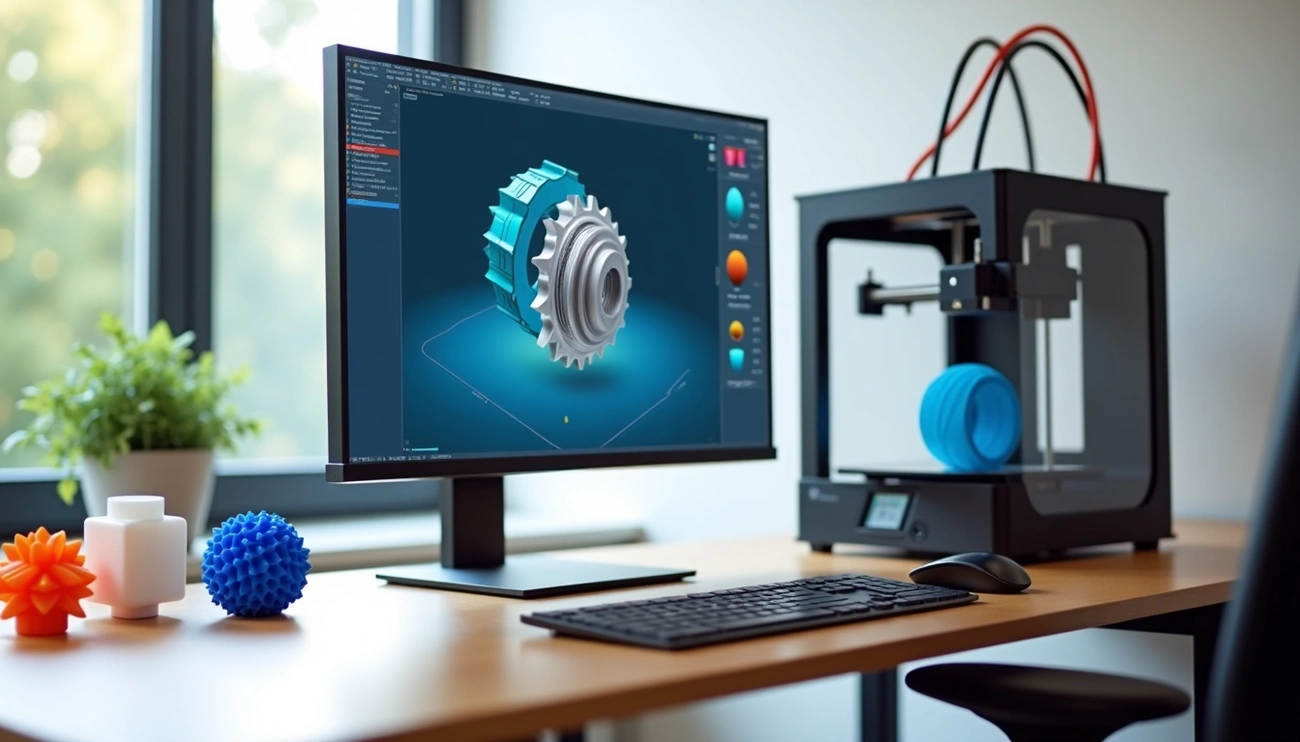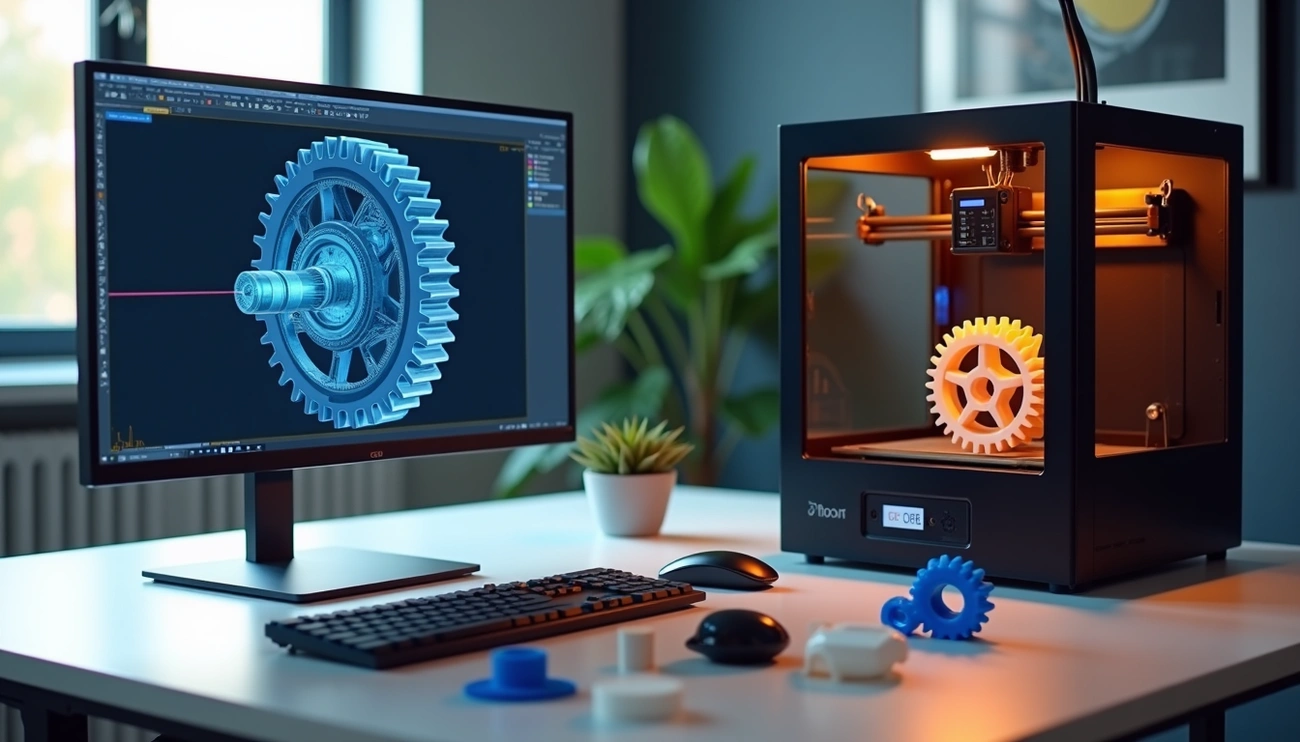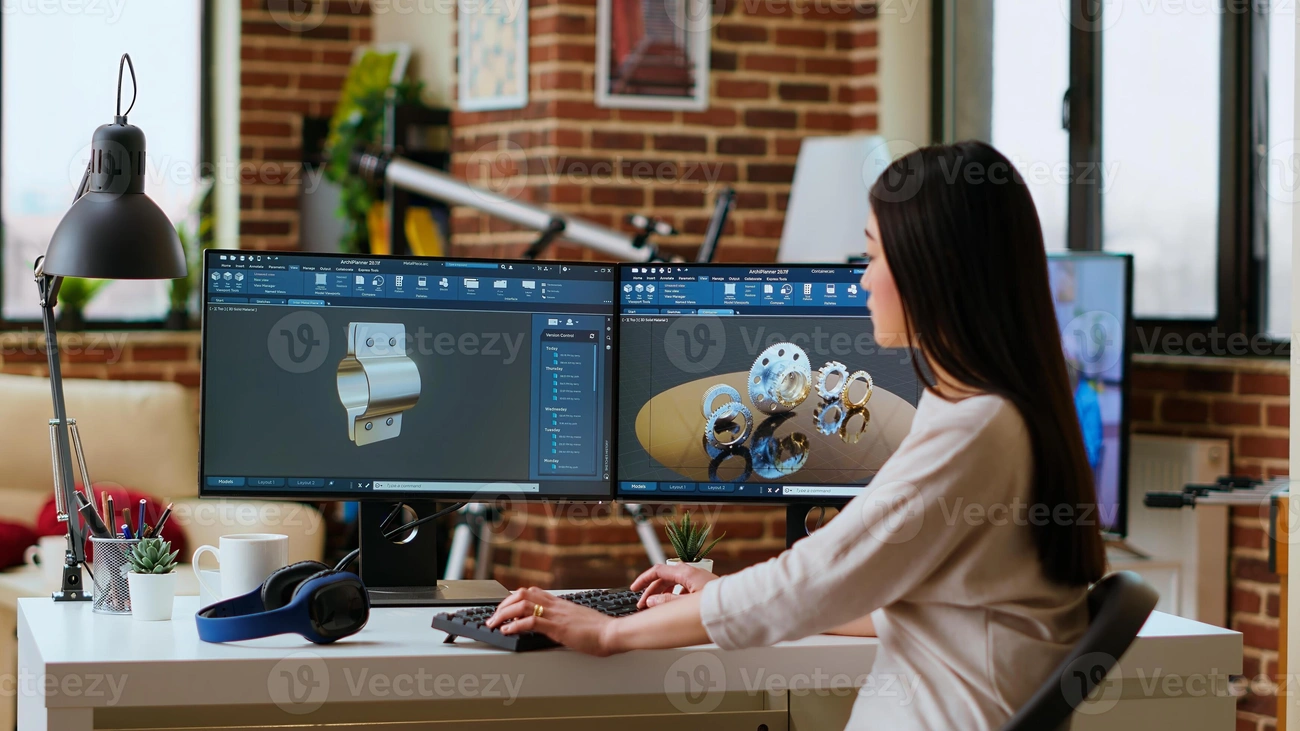
AI-powered CAD technology revolutionizes 3D modeling by slashing design time requirements. Traditional 3D modeling demands extensive time investment from designers. A revealing example shows how 26 students invested 1,550 person-hours on a single game project, with 500 hours spent on low-poly modeling alone. Modern artificial intelligence CAD systems have changed this landscape by generating complete 3D scenes from a few static photos, which cuts production time by a lot.
AI CAD software now catches errors automatically and validates every curve, line, and dimension against industry standards. These intelligent systems process vast datasets to spot design patterns and suggest improvements that once needed extensive manual effort. To name just one example, MIT researchers created VideoCAD, a dataset with over 41,000 examples of 3D model construction, which helps AI build complete 3D shapes from basic 2D sketches. Companies racing to market benefit from CAD AI through automated processes, optimized workflows and immediate feedback. This piece explores how these AI-driven CAD generators deliver measurable results in industries of all types.
Why AI is Transforming 3D Modeling in CAD
AI has made traditional CAD design methods obsolete by solving age-old problems. Modern engineering projects need speed and precision that manual 3D modeling processes can’t deliver. This change to AI-powered CAD goes beyond a simple tech upgrade – it completely changes how designers work.
Reducing Manual Workload in Complex Modeling Tasks
CAD work has always involved countless hours of boring tasks that add little creative value. The SketchGraphs dataset shows only 8% of sketches are fully constrained, which means 92% would act unpredictably during edits. Designers often get stuck in a frustrating loop of manual red-lining and re-drawing that wastes valuable project time.
AI CAD software offers a solution. To cite an instance, Autodesk’s AutoConstrain tool has applied almost 900,000 geometric sketch constraints for commercial users across sectors since its launch. The best AI methods now fully-constrain 93% of sketches compared to just 9% for base models. Professional CAD designers strongly preferred this tenfold improvement during evaluations.
These advances bring significant benefits:
- A single button click now completes edge smoothing tasks that used to take an hour of clicking hundreds of edges
- Selection Helper spots components like chamfers, filets, or edges that match or mirror what designers have already picked
- Object Detection scans drawings with machine learning to suggest objects for block conversion, while BCONVERT handles block conversion after geometry selection
Designers can now perfect their work instead of spending hours on repetitive setup tasks like defining sketches, planes, reference geometry, and constraints. This change removes what professionals call “manual drudgery” from design work.
Improving Design Speed and Accuracy with AI CAD Software
AI CAD generators deliver clear efficiency gains. Research shows companies using AI-powered design tools see 30-50% efficiency improvements across design workflows. AI-BIM cuts design revision cycles by 30%, and BIM workflows work 31% faster than standard CAD approaches.
Project economics benefit directly. Digital coordination of structural, mechanical, electrical, and plumbing systems through AI-enhanced platforms solves conflicts before they become costly field issues. DraftAid makes drafting three times faster by turning multiple commands into one-click actions and creates fully dimensioned sheets in minutes.
AI CAD design boosts accuracy through:
- Built-in rule checks that automatically enforce standards
- Automated reviews that catch code issues early
- Instant clash detection instead of waiting for coordination meetings
- Parameter checks that stop dimensional errors before saving
The benefits reach sustainability and affordability too. Ground projects have built housing “at half the cost, time, and carbon footprint of typical Bay Area multifamily buildings” using AI-powered design optimization. This marks a basic economic change in design exploration. AI generates hundreds of optimized design options, compared to the manual work needed for even a few concept approaches.
Teams can now spend more time on coordination, client discussions, and creative problem-solving – the valuable work that wins projects and drives new ideas. This happens because AI takes care of repetitive drafting and modeling tasks.
Key AI Technologies Powering CAD Automation
Modern CAD systems run on powerful AI technologies that shape today’s automated design environments. These technologies have changed the way engineers tackle complex modeling tasks and opened new doors for efficiency and creativity.
Generative Design for Multi-Variant Prototyping
Generative design stands out as a game-changing advancement in CAD AI. Engineers can now input their design goals and constraints to automatically create multiple design alternatives. This helps them explore countless options quickly and develop better, more innovative solutions.
The real power comes from how it handles design parameters. The system looks at everything at once—materials, manufacturing methods, and performance needs—to create designs that are stronger, lighter, and work better. You could call it a 3D CAD feature that creates the best possible designs based on what you need.
Here’s what you get when you use generative design:
- Hundreds of design options created automatically
- Less material waste while keeping performance high
- Better product durability by fixing weak spots
- Design work gets done much faster
Autodesk Fusion 360 lets designers try different manufacturing methods to solve engineering problems faster. PTC’s Creo uses AI-driven generative design to create better designs in less time based on what users need.
Machine Learning for Pattern Recognition in Design
Machine learning helps CAD software learn from past projects. The AI spots patterns, suggests the best design solutions, and comes up with new ways to tackle challenges.
ML algorithms are great at going through huge amounts of CAD data—from shapes to materials and manufacturing limits. They spot design issues that could cause problems later. Engineers get feedback right away during design, so they catch problems long before making prototypes.
These tools have come a long way. CAD command prediction has moved from basic statistics to advanced deep learning models. Now systems learn from old projects, test results, and problem reports to spot patterns that might lead to design flaws.
PTC’s AI tools look through massive amounts of data to create better designs and spot potential issues early. Siemens NX, a complete mechanical engineering package, uses AI and machine learning to personalize experience, make interactions smarter, and offer intelligent suggestions—all without extra programming.
Automation of Repetitive Modeling Operations
Automation takes care of repetitive calculations and routine drafting work. This lets human designers focus on bigger decisions and creative solutions. It turns boring design tasks into quick processes that save hours of work.
AI tools make repetitive work easier, improve designs, and catch problems early to boost efficiency and innovation. Real-life applications keep growing. To name just one example, Selection Helper finds similar or matching parts like chamfers, filets, or edges that match what designers picked. Mate Helper adds copies of things like bolts and fasteners by suggesting where they should go.
The software includes other time-savers like Sketch Helper, which guesses your next sketch based on what you’ve done before, and Smart Mate, which creates mates automatically when parts line up. These tools adapt to how each person works, learning and adjusting in real time.
These automation features do more than just save time. Engineers can spend more time being creative and solving problems because they spend less time on manual work. AI in CAD makes products better by improving design processes, reducing mistakes, and speeding up testing. This leads to better designs and more efficient work.
Real-World Applications of AI in CAD Tools
Major CAD software companies have implemented AI in unique ways that show the practical value of these technologies in real-life design scenarios. A look at these applications reveals how AI CAD tools are changing professional practice in a variety of industries.
Siemens NX: Smart Interactions and Personalization
Siemens NX uses AI to personalize, predict, enable smart human-computer interaction, and provide AI services that let customers train models with their own data. The software watches how users work with the system and learns their usage patterns to personalize the interface. Both expert and novice users benefit from this comprehensive approach as it offers contextually relevant commands without manual menu navigation.
NX Command Prediction learns from user actions and predicts the next likely commands based on the current design context. The software can spot operation patterns in routine tasks like preparing designs for release and group them into a single command sequence. On top of that, it offers NX Voice Command Assistant for natural language interactions. Designers can now execute commands through speech instead of clicks, which makes the design process faster.
NX Selection Prediction smartly identifies and selects geometrically-similar components. This feature speeds up design modifications through bulk operations. Designers find this especially helpful when they have complex assemblies with many similar parts.
Autodesk Fusion 360: Generative Design for Manufacturing
Autodesk Fusion 360 brings AI to life through its generative design capabilities. The software creates multiple CAD-ready solutions faster based on manufacturing constraints, costs, and performance requirements. This method follows nature’s design process by testing and learning from each iteration.
The system helps designers to:
- Minimize mass and material use while maintaining performance standards
- Improve product durability by eliminating weakness areas
- Combine multiple components into solid parts, which reduces assembly costs
Fusion 360’s generative design optimizes different production methods including CNC machining, injection molding, casting, and additive manufacturing. The software improves consistency in CNC machining machines of all types. It optimizes injection molding for higher production rates with lower cycle times, while improving quality and reducing material waste in additive manufacturing.
PTC Creo: AI-Driven Design Optimization
PTC Creo features AI-driven tools that automate repetitive tasks. Engineers can now focus on state-of-the-art solutions instead of tedious processes. The software’s AI-powered generative design lets designers explore multiple design alternatives faster while considering materials, manufacturing methods, and performance requirements.
Engineers must specify their goals, requirements, preferred manufacturing processes, and materials before Creo generates optimal manufacture-ready designs. This approach helps deliver better designs in less time and increases efficiency through automation.
Creo’s AI algorithms analyze big amounts of data to create optimized designs and predict potential risks before they happen. The software also supports environmentally responsible practices by optimizing resource use. It reduces waste by using AI to identify sustainable materials and manufacturing processes.
These implementations show how CAD AI generators bring measurable improvements to design efficiency, innovation capacity, and product quality in industries of all types.
How AI CAD Enhances Design Validation and Simulation
AI brings powerful capabilities to design validation and simulation processes beyond creation and modeling. These capabilities show remarkable results in testing phases where manual work was once the norm.
AI-Powered Mesh Analysis and Topology Checks
The mesh topology’s quality directly determines a 3D model’s performance in animation and deformation. Modern AI CAD tools analyze topological structures and spot issues that designers might overlook. These systems can detect several problems:
- Edge connections that create unnatural wrinkles during deformation
- Uneven mesh distributions that make animation difficult
- Triangular faces that reduce rendering quality
AI improves mesh quality by analyzing historical and up-to-the-minute datasets within CAD programs. This generates high-quality meshes automatically. The system adjusts the mesh dynamically by adding or removing nodes in specific areas to enhance accuracy.
Simulation-Ready Models with Minimal Manual Cleanup
Preparing simulations has always been time-consuming. Tasks like geometry preparation and meshing need expertise and often lead to errors in conventional simulation. The PhysX-Anything framework transforms single images into simulation-ready 3D models with explicit geometry, articulation, and physical properties. The system automatically generates physical attributes like mass, density, friction, and inertia tensor.
Predictive Maintenance and Failure Detection in Manufacturing
Machine learning helps detect failure patterns before they occur in AI predictive maintenance. Manufacturers can avoid disruptions that get pricey, as typical facilities face 27 hours of unplanned downtime monthly at $25,000 per hour. Large facilities see costs rise above $500,000 per hour.
Maintenance teams can move from reactive to proactive approaches by analyzing sensor data. A prominent logistics provider installed sensors on conveyance equipment and used analytics to track equipment lifespan. This helped them target maintenance before failures occurred.
Future Trends in AI for CAD Modeling
The rise of CAD AI moves forward quickly, and game-changing technologies are set to reshape the industry. Looking ahead, three major trends will change how designers and engineers work with modeling tools.
Natural Language Prompts for 3D Model Generation
Text-to-3D model generation stands out as one of the most promising areas in CAD AI. Machine learning breakthroughs have boosted our ability to create 3D objects straight from text descriptions. Scientists have created new ways to turn natural language into parametric 3D objects through Large Language Models (LLMs). They use multiple specialized agents to analyze text prompts into design elements with exact geometry and spatial relationships.
The industry pushes toward better meshes, smarter prompt interpretation, and live generation. MIT engineers have created VideoCAD, which includes more than 41,000 examples of 3D model building in CAD software. This allows AI to use CAD programs just like humans do. The dataset lays the groundwork for an AI-enabled “CAD co-pilot” that suggests next steps or handles repetitive build sequences automatically.
AI-Enhanced VR and Digital Twin Integration
Digital twins—virtual copies of physical objects or systems—get more powerful through CAD AI integration. These twins update with live data from sensors, building information models, and IoT devices. By 2030, experts predict 29 billion connected IoT devices will feed data into these systems.
The digital twin and CAD software market will grow steadily through 2032. Live simulation and design optimization drive this expansion. Cloud-native platforms make this possible by cutting costs and enabling worldwide teamwork.
Results speak for themselves. Stanford University found digital twins lead to 40% fewer non-budgeted change orders. They also cut lifecycle operational costs by 9%, speed up project delivery by 7%, and boost building occupancy rates by 3.5%.
Sustainability-Focused Generative Design
Without doubt, sustainability shapes the future of AI CAD systems. CAD tools now pack machine learning algorithms that suggest eco-friendly materials, predict when parts might fail, and fine-tune designs based on sustainability goals.
These systems now offer live analysis of materials’ environmental effects. AI calculates instant CO2 savings when switching materials in plastic design projects. All the same, AI and generative algorithms use lots of computing power, which raises valid questions about their energy use.
The technology must become more energy-efficient as it grows. This helps match digital progress with environmental goals. Yes, it is clear that the right CAD tools turn sustainability into a design advantage. They unlock new levels of efficiency, performance, and environmental care.
Conclusion
This piece shows how CAD AI has transformed 3D modeling in many industries. AI now completes tasks in minutes that once took hundreds of manual hours. Modern AI-powered systems deliver results that traditional design methods can’t match.
A fundamental change has emerged through the combination of generative design, machine learning, and automation. Designers spend their time solving creative problems instead of handling tedious tasks like edge smoothing or constraint definition. Design workflows have become 30-50% more efficient. The systems also boost accuracy through continuous rule checks and automated compliance reviews.
Each major software platform takes its own approach to AI. Siemens NX learns from user patterns to create simplified processes with smart interactions. Autodesk Fusion 360 stands out in manufacturing with generative design. PTC Creo’s AI-driven tools predict problems before they happen.
AI has also improved validation and simulation capabilities. The technology creates models ready for simulation with minimal cleanup. It analyzes complex meshes and enables predictive maintenance systems that help manufacturers avoid expensive downtime.
The future of CAD AI looks bright. Natural language prompts will generate complex 3D models. AI-enhanced digital twins will provide up-to-the-minute data analysis. Sustainability-focused generative design will optimize resource usage. These advances will expand what’s possible in 3D modeling.
CAD AI’s impact goes beyond just technological progress. It has reshaped the entire design process. As these tools grow more sophisticated, they will enable designers and engineers to solve complex challenges with unprecedented efficiency and creativity.